
Student Reports
The students of Liceum Ogólnokształcące Zakonu Pijarów in Krakow and the students of Xantus Janos Idegenforglalmi Közepiskola in Budapest were working on the mining and the different usings of salt in our everydays life.
Here you can download a Powerpoint- Presentation about Salt in Poland.
Salt-mine in Wieliczka – the history of salt manufacturing
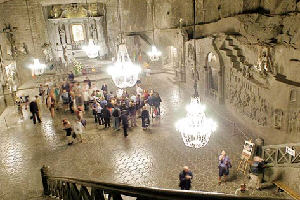
1. Wieliczka – The beginning of salt manufacturing :
The salt mine in Wieliczka belongs to the oldest mines in Europe and salt
manufacturing in this area began in the Middle Neolithic period (around 3500 B.C).
People discovered salt springs in the area, which they started to draw and
vaporise to obtain salt.
2. Wieliczka - the oldest mine in Europe :
Soon after, thanks to its resources, the place became famous enough to have the
individual extraction turned into organised industrial production. The newly
created salt-works produced salt cones and cylinders of around 500 g, which for
a long time served the inhabitants as a replacement for coins.
3. Salt manufacturing in the Middle Ages :
The 13th c. was noted for the people's intense activity of laying towns. The
document of Wieliczka's location under the Franconian law (Ius franconicum) was
prepared in a draft form under the rule of Henry IV Probus. The event took place
around 1289 and was firmly connected with the latest discoveries of rich mineral
salt resources deep under the ground. Unfortunately, the prince's death
prevented his officials from concluding the document.
The Kraków throne was passed on to Przemysl II, Henry's heir indicated in his
will. It was only under the new ruler that Wieliczka's civic rights, prepared by
his predecessor, were confirmed and extended. The occasion took place in 1290,
which marked the beginning of Wieliczka as a town. The location documents once
again cited the town's name: Magnum Sal.
4. The Legend
Kinga was the daughter of Bela IV, the king of Hungary, and the wife of
Boleslaus the Shy - who ordered the Wieliczka miners to dig holes and create
shafts so that they could find, deep under a thick layer of soil. her engagement
ring thrown into a shaft of a Hungarian salt mine in Maramarosz. The first
excavated lump of salt (that of Wieliczka, as the town dwellers maintain, to
which the inhabitants of the nearby Bochnia sneer claiming the salt block came
from their town) contained the ring, which was solemnly handed over to the
princess.
Salt Acquisition
There are different ways of salt mining."Room and pillar" method is one of them.
Rock salt is excavated by blasting and loading out a series of rectangular
entries and cross cuts. The mine roof is usually supported by iron pillars.
When a new mine is constructed, two shafts are excavated down to the salt
deposit.After the shaft is sunk to the salt, rooms are mined in a planned
pattern by undercutting, drilling and blasting.
After loose pieces of salt are removed from the roof and pillars for safety
reasons, the blasted salt is loaded into large trucks by front end loaders, or
loaded by load-haul-dump units of lesser capacity.
The crushed salt is transported by conveyor belts to salt "pockets" at the shaft
bottom for loading and hoisting to the surface. At some mines, the skip loading,
hoisting, and surface dumping operations are managed completely by computers.
Maria Kubiak
Salt in Poland
WIELICZKA
In 1978 the Wieliczka Salt Mine was entered on the UNESCO World Cultural
Heritage List. Visitors take a walk of 2,5 km through 3 levels in the Salt Mine
down to 136 meters below ground level, through chambers and passageways
excavated in the 17th century. On the way visitors see underground chambers and
chapels hewn out in the salt rock, statues of saints sculpted in salt, and
saline lakes.
BOCHNIA
A little town near Cracow, which is (after Wieliczka), the most famous salt mine
in Poland. The Bochnia salt mine was founded in 1248. According to a legend the
mine was founded by St. Kinga, the daughter of Hungarian King Bela IV. St. Kinga
at least has her own portrait in the church of the mine, some 200 meters below
the ground level. Also the village of Bochnia and the surrounding area dates
from the time when the mine was founded in 1248.
CIECHOCINEK
In Ciechocinek salt from the wooden graduation towers can be smelt from far away.
Salty air with a great amount of iodine makes you feel like on the Baltic coast,
although the sea is about 200km from here. Ciechocinek was famous for its
subterranean brine springs already in the Middle Ages. In 1235 Duke Konrad of
Mazovia granted the Teutonic Order the right to produce salt by evaporating the
brine in exchange for 20 barrels of it a year. The Teutonic Knights built two
saltworks in Ciechocinek which operated until the end of the 18th century. A new,
enormous works was constructed in the mid 19th century and it was the largest
factory of its kind in the world. The production techniques in Ciechocinek have
not changed for 120 years.
INOWROCLAW
Inowrocław is an industrial town known for its saltwater baths and salt mines
discovered in 15th century.
KŁODAWA
Nowadays it is the most important salt deposit in Poland, where the rock salt is
mined.
by Maryla Baczyńska and Ewa Zduńczyk
Salt resources
There are many salt resources in Poland. Let us have a look at the location of
the resources and their kinds.
The salt resources from Perm can be found in 2/3 of mid-northern Poland and the
north-eastern part of Greater Poland. The salt resources from Tertiary are
located on the territory of Upper Silesia and the Baltic coast.
Salts are usually solid crystals with a relatively high melting point. However,
there exist salts that are liquid at room temperature, so-called ionic liquids.
Inorganic salts usually have a low hardness and a low compressibility, similar
to edible salt.
Salts can be clear and transparent, opaque, and even metallic and lustrous.
Salts exist in all different colours, e.g. yellow, orange, red, mauve, blue,
green, colourless, white, and black. Most minerals and inorganic pigments as
well as many synthetic organic dyes are salts.
We can distinguish 3 categories of salt: non-piercement, piercement and
part-piercement. It depends on the way in which salt deposit damages surrounding
rocks.
By Anna Baranowska and Katarzyna Pańczyk
Uses of Salt
Salt is used in greater quantities and for more applications than any other
mineral. It has more than 14,000 known uses. Everyone uses salt, directly and
indirectly. According to the Salt Institute people consume more than 16 tons of
salt each during their lifetimes (402 pounds a year). Only a small percentage of
that massive amount is ingested as food.
SALT IN FOOD -The most familiar use of salt undoubtedly is in the kitchen and
on the dining table. For thousands of years, salt has been used to preserve food
and improve taste. It has a wide range of uses: seasoning, preservative, color
controller and texture aid (for example in bread) and fermentation control.
WINTER ROADWAY SAFETY - Salt is the most effective, readily available, and
economical highway deicer in use today. It assures winter driving safety and
continued mobility, even under the most adverse snow and icing conditions.
SALT IN OUR BODIES -We have salt in every cell of our bodies - about 250
grammes (a cupful) in an adult human. That’s why our tears and sweat taste salty.
Salt plays a crucial role in keeping our bodies functioning properly. When we
exercise, when we’re hot, and when we’re going through physiological changes,
such as pregnancy or growing old, its role becomes even more fundamental. Most
crucially, it maintains the balance of our fluids, which carry oxygen and
nutrients around our bodies. The amount of salt we consume depends on our
individual eating habits, but typically about 20 per cent of our salt intake is
from foods that naturally contain salt, such as eggs, meat and fish. Many foods
contribute to total salt intake without being perceived as salty. For example,
white bread and cornflakes both contain salt but, unlike potato crisps or nuts,
the salt is contained within the food and not on the surface, where it is more
easily detected.
ANIMAL NUTRITION - Livestock, poultry and other animals do not always receive
adequate amounts of sodium and chloride from forages and other feeds. They need
supplemental salt as part of a nutritionally balanced diet to remain healthy,
disease free, and to achieve optimum growth and reproduction rates.
WATER CONDITIONING - Water is conditioned or softened by removing the calcium
and magnesium ions from hard water and replacing them with "soft" sodium ions.
Water softeners use cation exchange resin to exchange sodium for calcium and
magnesium.
CHEMICAL FEEDSTOCK AND INDUSTRY - The greatest single use for salt is as a
feedstock for the production of chemicals. The chlor-alkali industry uses salt,
primarily as salt in brine from captive brine wells, to produce chlorine and
caustic soda. In industry we use salt for: aluminum purification, hide curing,
pottery production, soap & glycerine production, synthetic rubber manufacture,
textile dyeing and drilling.
Famous Salt Mines in Hungary
Szováta
This town has been a holiday resort for a long time. There used to be a sea here
millions of years ago. The water’s settled salt was kept by a lagoon, and
created a special surface. The salt layer got washed by the water and little
caves and channels were formed. The bigger cavities could not hold the weight of
the ground above and the collapse created salt lakes. Black Lake, one of
Szovata’s oldest lakes might have been formed in this way as well.
The biggest lake called Bear Lake, started to form in 1827. It is the world’s
biggest and Europe’s only heliothermal salt-lake /it means that it is heated by
the sun/. It’s deepest point is more that seventeen metres. In this lake there
are 64,000 tons of dissolved salt. Because of its high salt content, swimmers
can easily float on the water. They have a good opportunity of entertaining and
recreation, and they can even use its healing power.
Parajd
The salt of Parajd has been called Székely-salt since the 15th century. It’s one
of Europe’s biggest salt sources. Mining is still going on here even now, taking
600 tons of salt to the surface every day. Anyone can go on a ’tour’ to the open
mine organised by the mining company. The salty air of the mine can cure
allergies and some other diseases. Here we can also find a salt spa. Within easy
walking distance, one of Transsylvania’s most beautiful places, the Salt
Precipice fascinates the visitors.
by Attila Fekete
Did you know that…
- The largest salt desert is the Salar de Uyuni, located in South-America. Its
territory is 12,000 square km and it is situated 4,000 metres over the sea level.
There used to be a lake which has drained and 4 meters of salt remained in its
bed.
- The human body cannot exist without salt. Salt has been worshipped, salt has
been used as money. Salt was once worth its weight in gold.
- Our body needs 0.2 grams of salt a day but a European eats 15 to 20 grams
daily.
- The salt content of our tear and blood is 1 per cent.
- 27 % of the body’s salt is in the bones.
- Our brain could not work without salt.
- If every particle of salt were taken from our bodies, we would live about 48
hours.
- One of the greatest military roads in history was built to bring salt from the
salt mines of Ostia, on the Tiber River, to Rome. This road is called Via
Salaria and is still in use. Romans were paid with salt coins called ’solarium’,
from which came the English word ’Salary’.
- Town names ending in ’wich’ and ’saal’ are towns that were founded because of
salt availability.
- The environmental pollution lowers the quality of sea salt.
- The gesture of rubbing raised index finger, forefinger and thumb together (like
when sprinkling salt on dishes) relates to money also because of the fact that
salt used to be used as a means of payment.
- Unrefined sea salt is a better choice of salt than any other types of salt on
the market. Ordinary table salt that is bought in the supermarkets has been
stripped of its companion elements and contains additive elements such as
aluminium silicate which is a very toxic elemint in our nervous system and
implicated as one of the primary causes of Alzheimer’s disease.
by Daniel Somodi
Quiz on Salt
1. How many percent of the world’s salt production is used for industrial aims?
A) 5% B) 70%
C) 52% D) 93%
2. How many percent of the world’s salt production is necessary for the food
industry?
A) 13% B) 20%
C) 1% D) 0,02%
3. How many percent of the world’s salt production is used as culinary salt in
our householdings?
A)1% B) 40%
C) 0,1% D) 15%
4. How many percent of the sea’s water is the Sodium-chlorid?
A) 33% B) 2,5%
C) 77% D) 92%
5. Why does the moose often go into the water of lakes or rivers?
A) It is warm outside and he wants to cool down his body.
B) The watery plants contain more dissolved mineral salt.
C) He likes having big baths.
D) It is a part of their breeding season.
6. Worldwide salt is produced commercially in about 100 countries with an
estimated global annual output between:
A) 1000-900 million tonnes
B) 180-200 million tonnes
C) 70-80 million tonnes
D) 520-600 million tonnes
7. How much is the salt content of our body?
A) 50% B) 0,8%
C) 26% D) 6%
8. The registered daily salt intake is between:
A) 15-20 grams
B) 4-10 grams
C) 0,4-1 grams
D) 50-55 grams
9. The world’s most salty seawater is located near
A) Hungary
B) Italy
C) Turkey
D) Greece
10. The reduction of the salt consumption is good for the following illness:
A) High blood pressure
B) Skin cancer
C) Loss of hair
D) Flu
by Diána Labbancz and Fruzsina Tasi
Salt in Therapeutics
Nowadays more and more people try to live and eat in a healthy way. Only a few
of them take care about our two most important food-stuffs: water and salt.
Without them there wouldn’t be life on Earth at all. Now I’m going to introduce
you the use of salt in therapeutics. There are many ways to experience the
curing effects of salt.
Salt Caves: Salt shows its positive effects in different ways. It softens your
skin, furthermore it cures internally as well, by reducing inflammations. Salt
caves are good for those who are suffering from asthma or other problems with
respiration. You can find even a hotel made up of salt in Bolivia, South
America.
Salt Lamps: Air contains positive and negative particles. Nowadays televisions,
computers, mobile phones (are blowing up) stop this balance between these
particles, which can cause headache, indisposition or can disturb concentration.
The salt lamp provides energy for us. There are many kinds of salt lamps with
various effects. They can be categorised according to their colour, form, size
and effects.
Salt Spas: A special business branch has been built up on salt. Therapeutists
and other professionals are working at the same place, where you can find all
the treatments, baths, massages and other therapies.
Using salt at home: In drugstores and organic shops you can buy many kinds of
salt from bathing salt to gift salt packs.
-Salt pillow: Putting some salt (which can be hot and cold either) into a towel
or a material and putting it on the aching area, helps to reduce pain. A hot
salt pillow is good for aviator ear, backache, kidney, liver and gall problems.
A cold salt pillow is good for bruises, sprains and arthritis.
-Inhaling: Boil water in a wide pot and pour some salt into it. You have to lean
above the pot with a big towel and inhale the hot vapour. It cures breathing
problems, asthma and flu. There is even a new technique: the salt pipe.
-Mouth and teeth: Salt prevents teeth from the formation of scale on them.
Gargling with salty water is cure for nearly all kinds of tooth complaints and
throat problems. Nowadays scales can be removed by ultrasonic treatment but this
modern technique is quite expensive.
-Skin and face: Washing face with salt-tincture every day helps to control the
pH balance of our skin. After a shower using special sauna, salt refreshes and
softens the skin. So there is no need to spend on costly treatments in beauty
saloons and buy expensive facecreams, you just have to take a look at your
kitchen shelf.
I hope I was able to prove, that although salt is an everyday thing, it helps
our life in different ways.
Salt and health
The opinion of experts about salt is very varied. Some say salt is the poison of
civilised men, while others call it white gold.
Salt prevents liquid getting to the place it has to. As a consequence our cells
dry out, while our organism is flooded with water.
Potassium-Sodium balance can be overrun by high salt consumption. Daily food
products like sausages, crisps, cheese and fast food cause it.
The so-called Potassium-Sodium pump regulates Potassium-Sodium harmony, but it
is accommodated to our original eating habits. In ancient times people consumed
0.7g salt daily.
The ratio of Potassium-Sodium intake was 1: 16 and later it changed to 48: 1 for
Sodium.
Exaggerated salt consumption can be counterbalanced by eating vegetables and
fruits (fruit contains 80-90% of water, because of their Potassium content are
they solid).
Too little salt consumption has a risk as well, for example tiredness,
concentration disturbances, muscle cramp and headache especially for the elderly.
The positive effects of salt consumption:
Salt is more than a spice, it is an important part of our metabolism.
The history of salt is unseparably connected to healing. It has been used for
mouth and teeth care, the healing of cold and mineral substitution. Nowadays
Himalayan salt is used is naturopathy because of its high mineral content.
There are three main types of Himalayan salt:
1. Bathing salt: It is unsuitable for consumption, but having a bath in water in
which Himalayan salt is dissolved is equal to a three-day- detoxication cure.
Soap formed salt pieces can be used as deodorants.
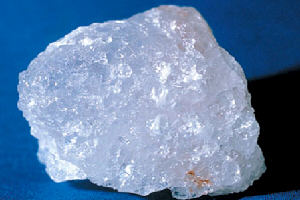
2. Halit: it is made of the clearest and most transparent crystals. It contains
99% of Sodium Chloride. It is used as a homeopathic medicine.
3. Everyday salt: it is the most valuable everyday salt of the Earth.
Since the 20th century Himalayan salt dissolved in cherry brandy has been used
as a so-called universal medicine. It cures spots, skin diseases, cold, and
headache, nose bleeding, gum problems and flu.
All in all, although salt is unhealthy, the intelligent use of salt can be good
for our health.
Salt in everyday life
According to specialists, an average person needs about 3-8 g salt per day.
Moreover, people can use it in order to conserve meat and fish. In Hungary salt
is one of the most important spices.
Since the end of the 20th century the number of people who suffer from asthma or
allergies has been increasing. Salt has curative power.
I would like to list some of the everyday usage of salt.
Saltmassage helps to keep us healthy and results in beautiful skin, and what is
more it calms people down and has a refreshing effect. During the cure, they
massage the whole body, the head and the face with herbal salt.
Using plasticine is a very good freetime activity for little children, who like
making interesting things of this material. Parents can prepare it easily,
because you just need flour, salt, water, oil, and a little glue. After
preparing it, children can start to compose things, e.g. presents, or decor.
Later they dry them in the oven.
Unfortunately, we can hear about lots of accidents which are caused by the
slippery roads, so nowadays it is very important to salt pavements, too. In
winter we can see vehicles, which salt roads to prevent accidents.
by Alexandra Kádár
Salt in eating habits
Most people don’t get concerned about salt in their diet, unless they have high
blood pressure. Salt or sodium is an important mineral utilized by the body to
maintain fluid balance, to regulate blood pressure, to transmit nerve impulses
and to relax muscles. Too much salt in the diet can contribute to high blood
presure, which can lead to heart disease or stroke. It is said that salt should
be used only when you need it. Sodium chloride is an important mineral in the
human body. Sodium is responsible for keeping the correct amount of water in the
blood in the cells. It is also necessary for proper brain, nerve and muscle
function.
Cooking salt consists of sodium and chloride. Sodium can be found in the human
body, particularly in bones and in tissues.
The more sodium we consume the thirstier we are. That’ s why we drink water
after salty dishes.
Consequently, as you see we can’ t avoid salt, so the solution is to take more
and more exercise and try using herbs and spices to bring out the flavour in our
food instead of using salt.
Salt Tale
Once upon a time there lived an old king, who had three gorgeous daughters. He knew he didn’t have got much time left, so he wanted to wed all of them. It wouldn’t have been difficult because he had three several lands, but as there are no three apples which are the same, the three countries were different too, but the king loved them in the same way, he decided to give the biggest one to thet girl who loved him the most.
-My dear children, I love all three of you alike, and for a long time have not known which one of you I should give my most beautiful land to, but now I know how to make a decision. I have only one question to you.-
He went to the oldest sister and asked her:
- How much do you love me, my dear?
- I love you, more than silver, and gold, dad.
He asked the middle one:
- How much do you love me, my dear?
- I love you, more than rubies and diamonds.
Finally he turned to the youngest:
- And how do you love me, my dear little princess?
- I love you my dear beloved father more than, people like salt.
The king grew angry when he heard the last answer.
- How can you compare me to something as cheap and common as salt?! Leave my palace, and even my country. I don’t want to see you any more, do not try to get in front of me again, if you love me just like this!
The little princess cried, and explained in vain how much she loved him and how important salt is, the king was adamant and exiled her.
The poor girl was desperately crying, left everything behind and looked for shelter in the nearby forest with the next princedom and she was jus running and running far into the forest. She was frightened and exhausted, she lay down under a willow tree and fell asleep. When she woke up a handsome young man was kneeling beside her, offering her water. First she was afraid, but the young man quieted her, and promised he wouldn’t hurt her, and would care for her. He told her he was the prince of the neighbouring land and invited her to his palace, where she could have a bath, and got new clothes, and food, and she told him why she was exiled. She was beautiful and kind, the prince fell in love with her, and they married, but the young princess wasn’t completely happy, so the prince decided to help her, so in secret he wrote a letter to the old king and invited him to his country for lunch, but he commanded the cooks not to put salt into the dish, and askd his wife to hide. When the king arrived the table was set, and fantastic dishes were served. All were the king’s favorites, but he enjoyed none of them. He tried to be polite, but finally he couldn’t bear it and marked that the food was terrible, and he didn’t know what the problem was but he couldn’t eat it. The prince asked:
- Would you eat it if you got silver, and gold…or diamonds, pearls, rubies?
- No I wouldn’t eat it for any precious thing, I would rather starve.
The prince called in the cook who brought the last dish. The king tasted it, and he had never been so happy with anything, than that food. He ate it to the last crumb in a minute, and begged to the prince to tell him what was in the food, and what was different.
- Salt. – answered the little princess to his father as se stepped into the room.
The king couldn’t breathe from the amazement. He realised how stupid he was when he chased her away, and how important salt is in life. He apologised and begged her to forgive him and accept the most beautiful land. She jumped into the arms of her father happily and they lived happily ever after.
St Kinga – Patron of Salt Miners
Saint Kinga of Poland was the daughter of Béla IV of Hungary and the wife of
Boleslaus V of Poland. She was also known as St Kunigunda, St Cunegunde, St
Kionga or St Zinga.
The Legend of Saint Kinga
In the 13th century a young Polish prince, called Boleslaw, decided to get
married and for his wife chose a beautiful Hungarian princess of the Arpad
Dynasty, the daughter of king Bela IV, Kinga.
When Boleslaw’s proposal was accepted, the loving father asked Kinga what she
would like to get from him as a wedding present, what she would like to take to
her husband and the new country. Kinga replied that she wanted no gold and
jewels, since they only brought unhappiness and tears. She wanted something that
could serve the people she was going to live with Her request surprised the king
greatly – she asked for salt.
The king was determinded to keep his promise. He offered Kinga the biggest and
most prosperous salt deposits in Hungary – the Marmaros salt mine.
On her way to Poland the princess visited the mine. She kneeled to pray next to
the entrance and, to everyone’s surprise, suddenly threw her engagement ring
inside. She gathered a group of the best Hungarian salt miners and told them to
follow her.
When the party arrived in Poland and was approaching Krakow, Kinga stopped and
asked ten miners to look for salt. They started digging and suddenly hit
something very hard. It was a lump of salt. When they broke it, everyone saw
what was hidden inside: Kinga’s engagement ring!
That is how the Hungarian princess brought salt to the country of Poland.
The History of Salt Mining in Hungary
Salt has always been indispensable in our lives, it has been built in our
culture. We use it to flavour meals, to conserve food, to make drinks and
medicine or to groom our skin.
Those ancient Hungarian tribes which had salt mines became rich very quickly
because of salt trade. Maramaros is one of the first salt mines to be famous in
Europe. A long time ago the lower parts of the Carpathians were covered with sea.
The constant drying of the sea lead to the formation of salt deposits. Later
these salt deposits were covered with other layers of sediment. At the thinner
sediments salt often came to the surface or burst out as salty spring-water.
From the beginning of the 11th century, salt mining was a royal monopoly
controlled by the chamber of the king. Salt was transported on the River Szamos
and on the River Tisza to the Great Plain. Later a road connected the town of
Des with Szolnok where salt was taken on horse-carts. In the 13th century salt
was transported even on rafts in the north of the country.
In the Middle Ages salt mining and salt trade in Hungary was very important
because of the export, for example to Moravia. The centre of salt mining was
Transylvania. The mines of Torda produced about 600,000 quintal salt per year.
Transylvanian salt mining was so high-quality that Transylvanian miners were
invited to work in Wieliczka in Poland.
At the lower parts of the Carpathians, the most famous salt mines can be found
in Aknaszlatina and its large-scale production is still on nowadays. Maramaros
and the naighbouring area was always very important in the salt mining of
Hungary. However, after the Treaty of Trianon the country lost its salt mines.
by Viktoria Kapa