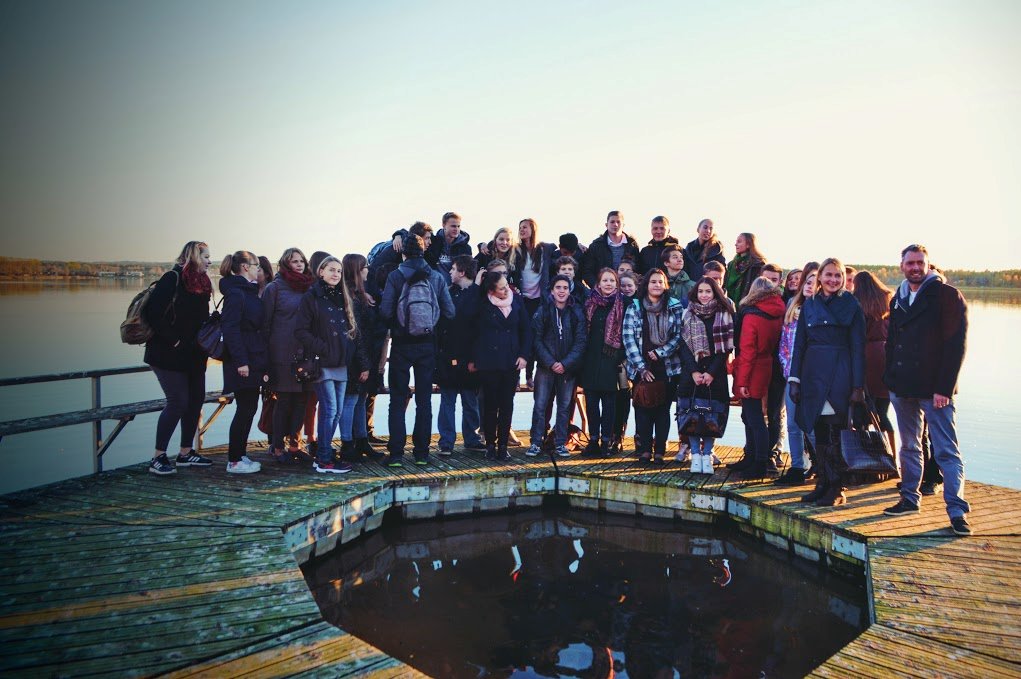
Belgium and Germany in Estonia October 2015

German and Belgian Students on an Exchange Week in Estonia
Even though some time has passed since the exchange, I still remember
everything like it was yesterday. We had been preparing for weeks in advance and
hopes were high, and, as it turns out, our faith was not misplaced.
Having
finished our last school day in the week, we headed home, just to get a little
bit of rest before the guests arrive, to see if everything was in order and tidy
enough to host someone we’d never met, someone, whose personality was a complete
mystery to us. Driving to the bus station to pick up our Belgian guests was
probably the most frightening part of the whole project, for me, at least –
anxiety combined with a little bit of fear. What if I said something bad or did
something wrong? All my worries were unnecessary, as I later found out, because
from the moment we greeted our guests, the whole project went up and running as
smoothly as possible. The German guests were scheduled to arrive 3 hours later,
but they missed their bus in Tallinn, so they caught a train that arrived 3
hours after what we had planned, resulting in the loss of a family evening, but
everything turned out just fine. Having housed all of our guests, our whole
household went to sleep to prepare for the following day.
Saturday morning,
after a nice homely breakfast, we set out to AHHAA Science Center, which never
fails to impress, but now more than ever, because they had a spy-themed
exhibition. Running around the center trying to keep an eye on all of the guests
was not an easy task, especially because it was a Saturday, and the center was a
cacophony of parents chasing their children and us chasing our guests and trying
to see the whole exhibition at the same time. Later, after three or so hours in
AHHAA, we went to Taverna to have dinner. As expected, we filled the restaurant
right up, but the staff was nice and the food was as good as always. That was a
family day, not related to the project’s theme of migration at all, so no actual
project work was done, but everyone was tired and quick to fall asleep.
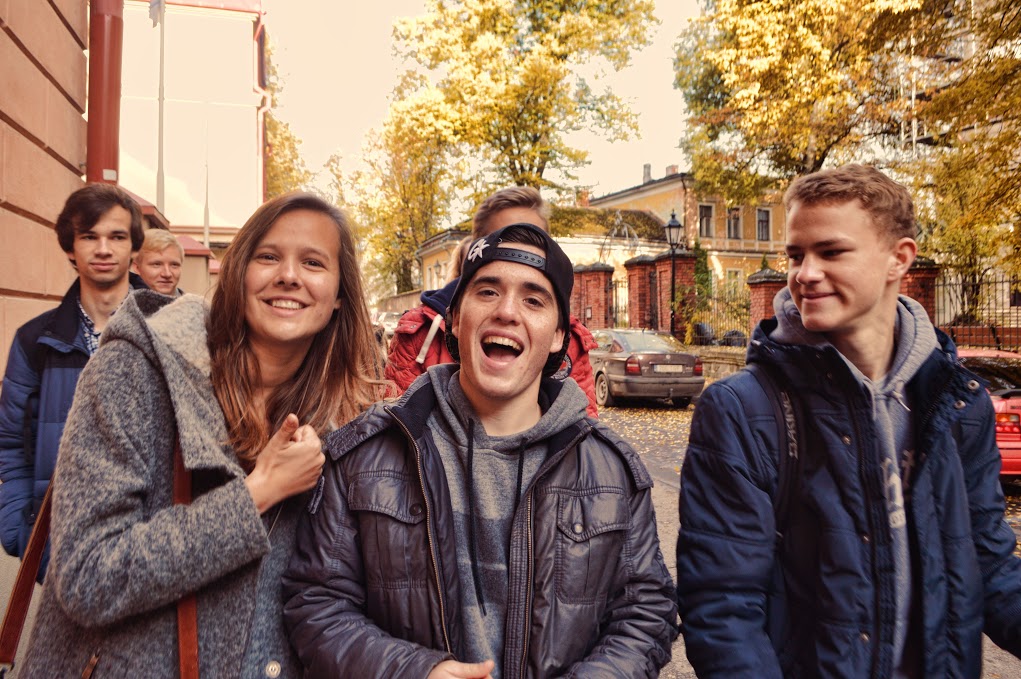
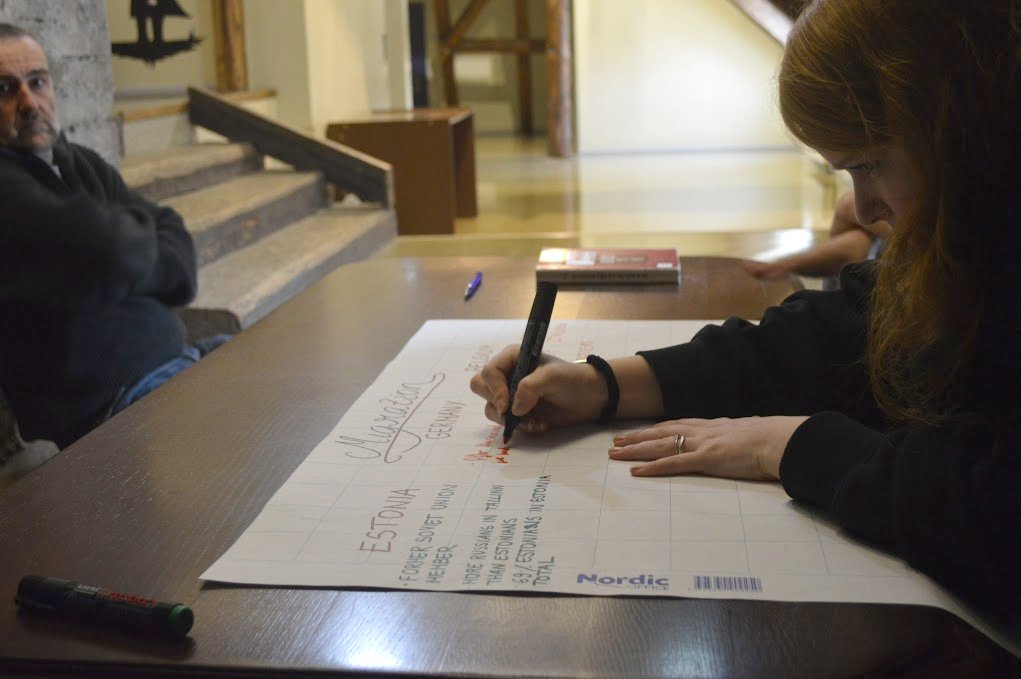
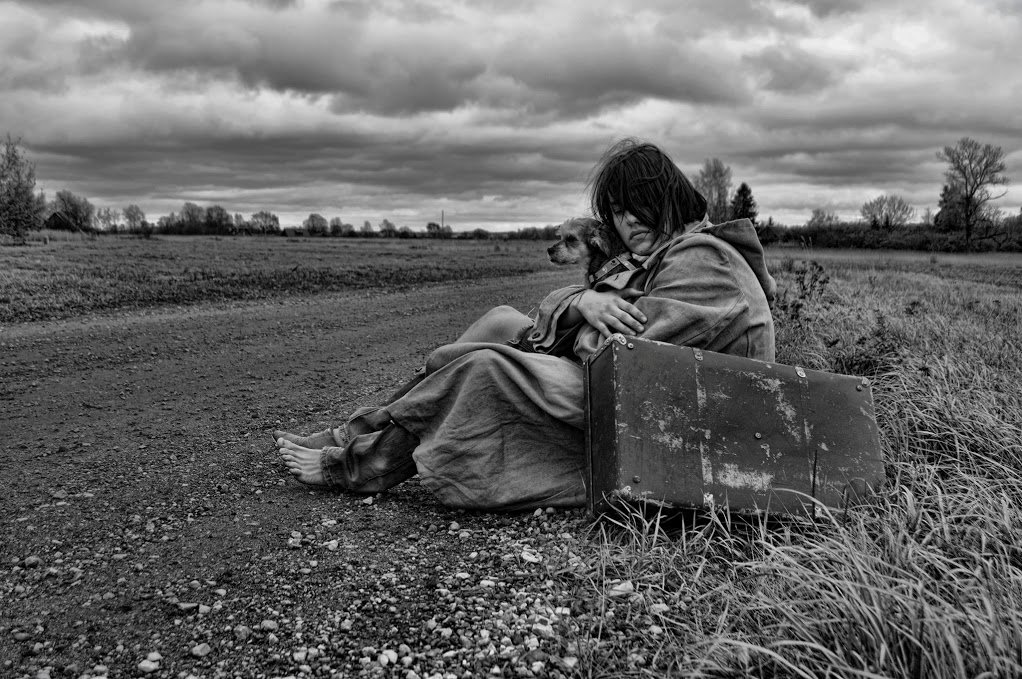
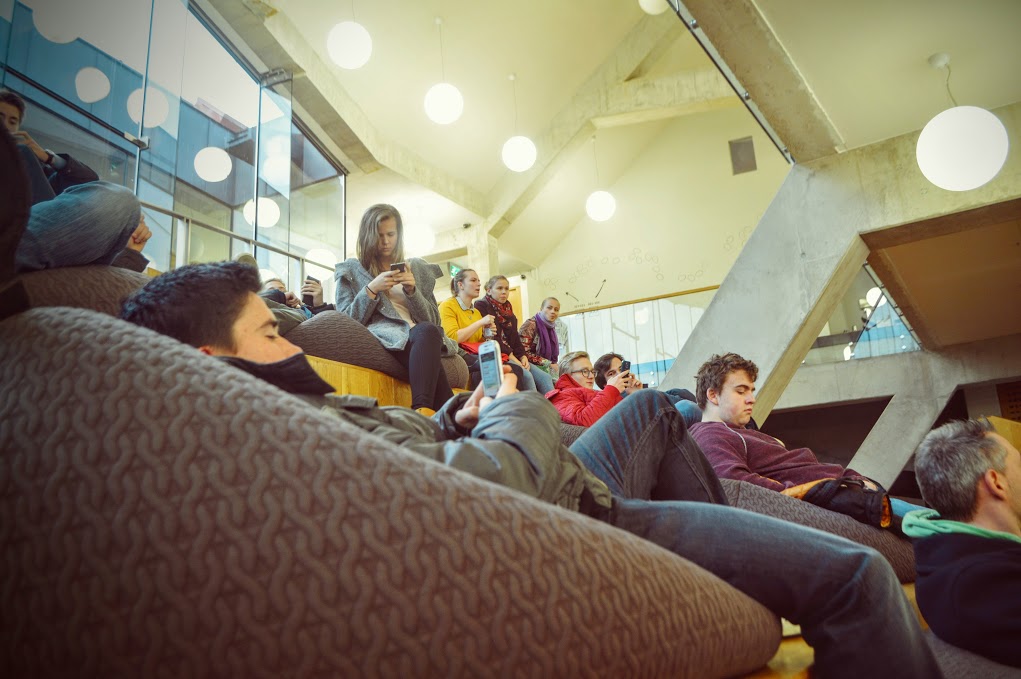
How exiting, our first day of actual project work, which, of course, started with a mandatory tour around the historical parts of Tartu, visiting Tartu University and Toome Cathedral and climbing the towers. After a lunch much needed after a long walk and climb, we divided ourselves into groups and begun on our project work. The groups were as follows – the theatrical performance group, tasked with creating a play, the digital story group, whose job was to display an immigrant’s story digitally, a songwriting and –performing group, a photo shoot and exhibition, and a board game design group, all of which had to be migration-related. It just so happened that I ended up in the photo shoot group, for which I did some modeling work. After about five hours of intense project work, we had a snack and games for icebreaking (which should have happened earlier) and floorball.
Waking three
guests and ourselves in order to get ourselves on a bus to Ida-Virumaa by 8 a.m.
is no easy task, something to keep in mind for future student exchanges. A three
hour drive, but worth it, since our visit to Narva College was very interesting
and informative, we learned about migration in a town that’s made up of 90%
foreign nationalities. As if that had not been enough for a field trip, we
visited the historical Narva Fortress, learned about medieval ways and gazed
over the Estonian-Russian border.
On the return
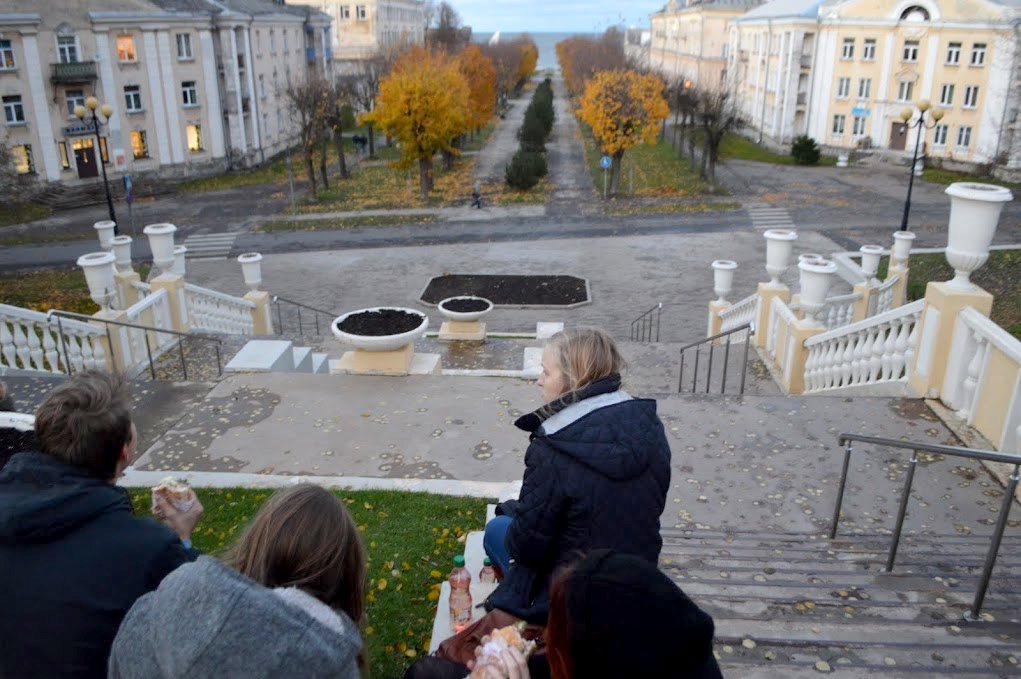
journey, we stopped at Sillamäe, a town that was, for quite a while decades ago,
hidden from public view, because the Soviet war machine needed somewhere covert
to operate. We had a quick sandwich picnic out in the open air. Falling behind
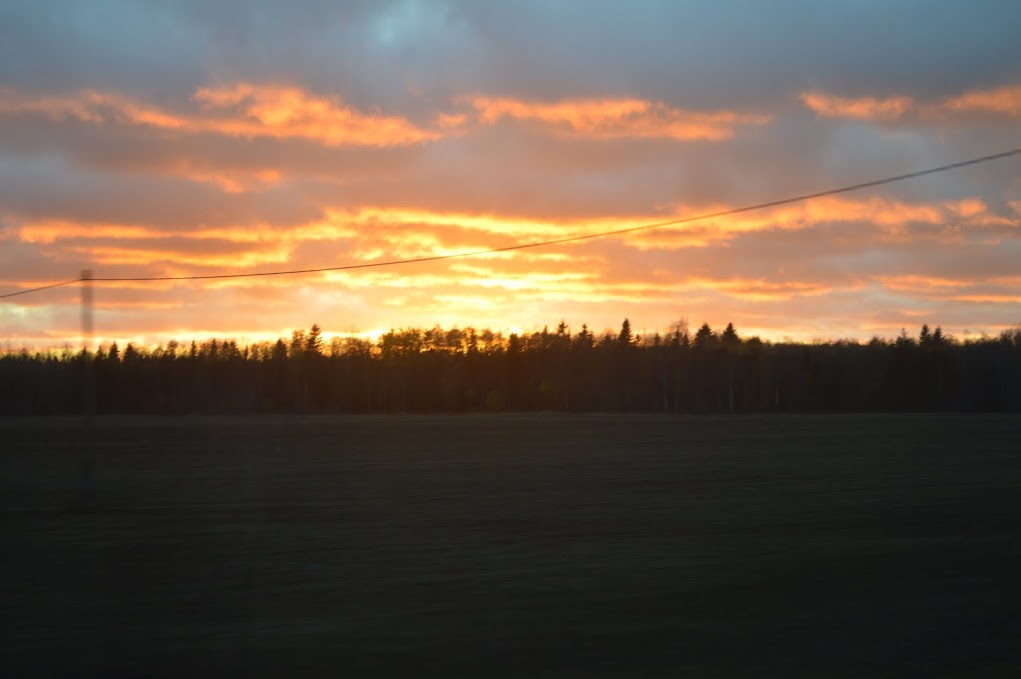
schedule, or rather, shivering from the cold, we started towards home again,
when I managed to snap a nice picture of the last sun rays, disappearing behind
the horizon.
Remember, when I said that getting five people up to catch an 8 a.m. bus
was hard? Well, now we did the same, but the bus we needed to catch left at 6.30
a.m. We hoped to reach the Selli-Sillaotsa bog before sunrise, to watch it
happen there, but, sadly, we didn’t make it in time. Still, a hike in the bog is
quite an experience, truly something one needs to do during one’s life. We might
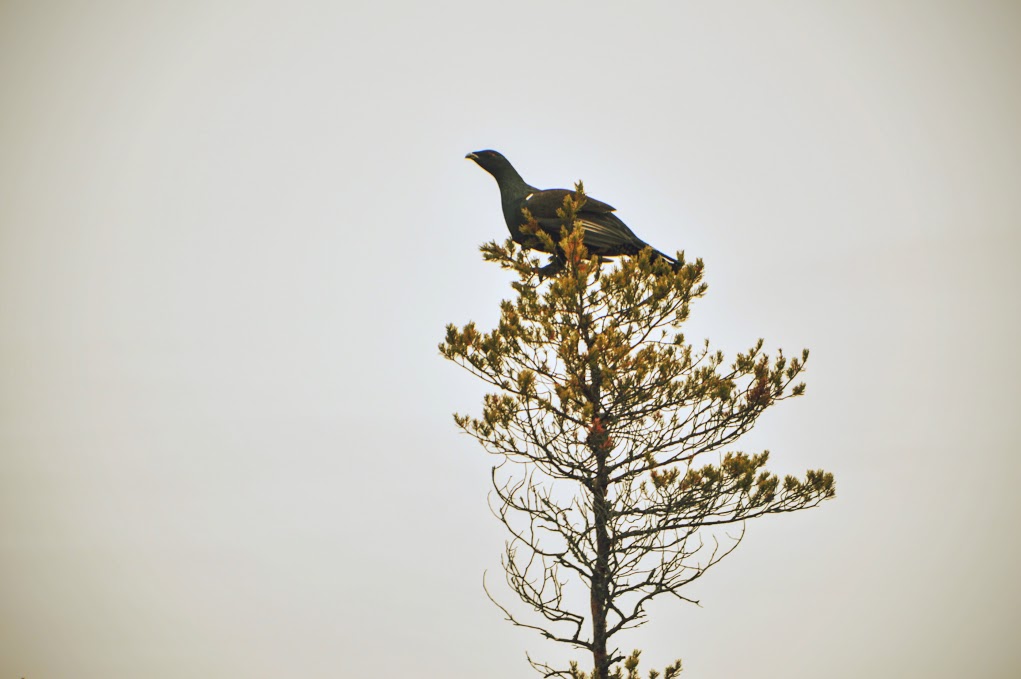
not have caught the sunrise, but we caught rare pictures of a capercaillie, or
wood grouse. Having walked the narrow plank trail for five kilometers or so, we
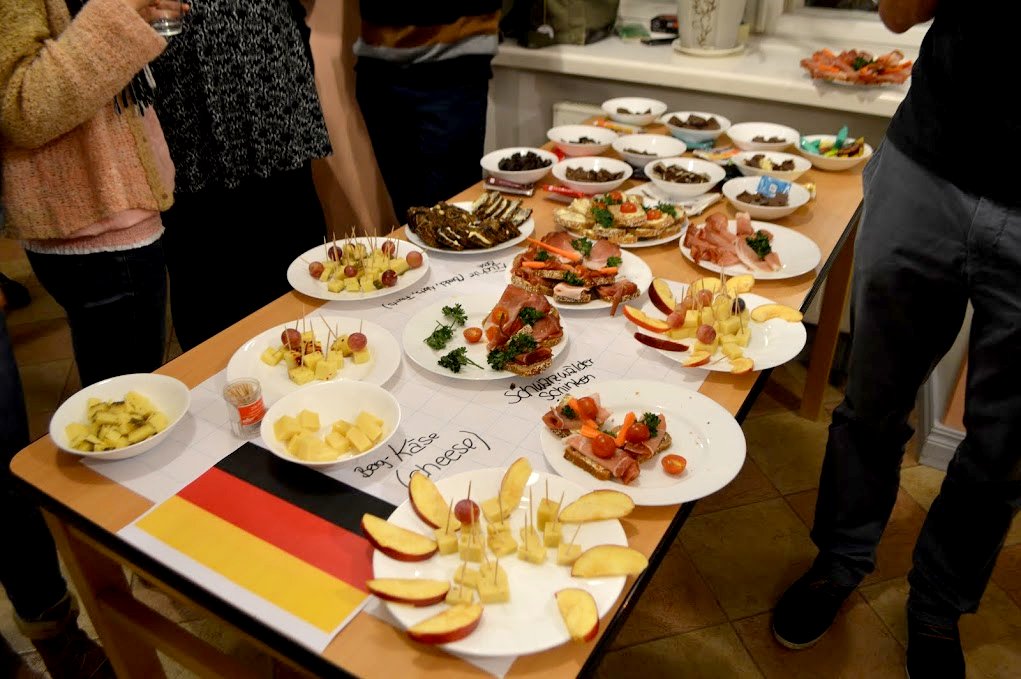
rode back to Tartu for; you guessed it, project work, after which we had a food
court with samples of each of the different countries’ foods’, just enough to
get an idea of what people eat there.
It was on this day, when we were reminded that more than half of the
exchange had passed, in fact, we were having a gala dinner that evening, but
we’ll get to that later. In the morning, we departed for Koidula border crossing
and met up with a students’ group from Sillamäe, so we could, yet again, gaze
over the Estonian-Russian border and listen to a guide talking about the history
of the crossing and problems related to border guarding. After this we went to
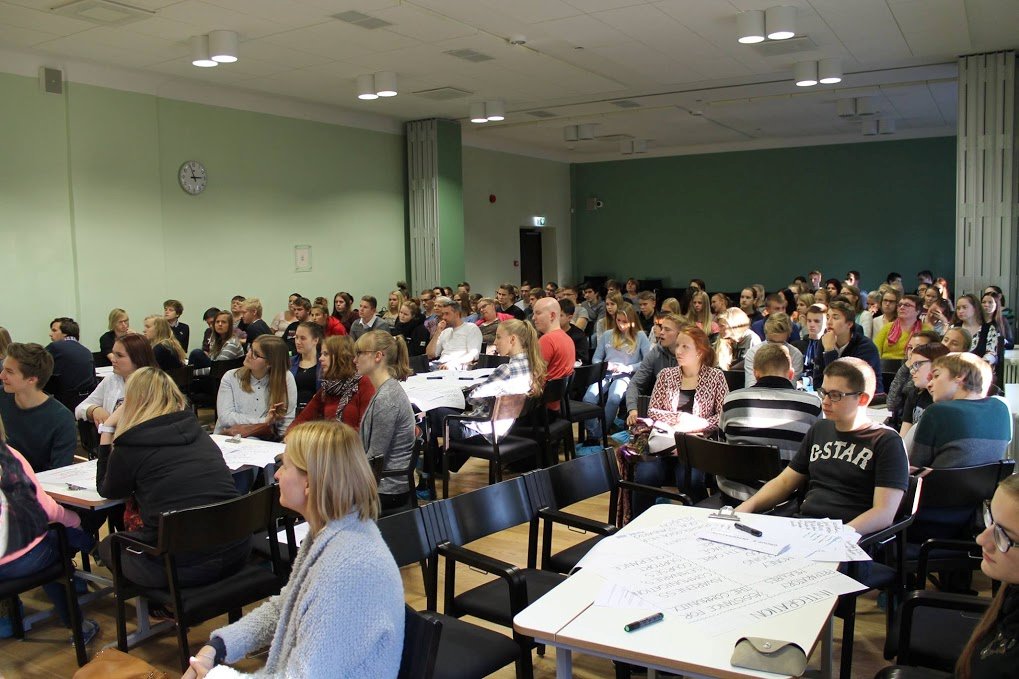
Võru Gymnasium, where we were divided into groups, so we could discuss problems
and topics related to migration and being a refugee. In the end, we had to
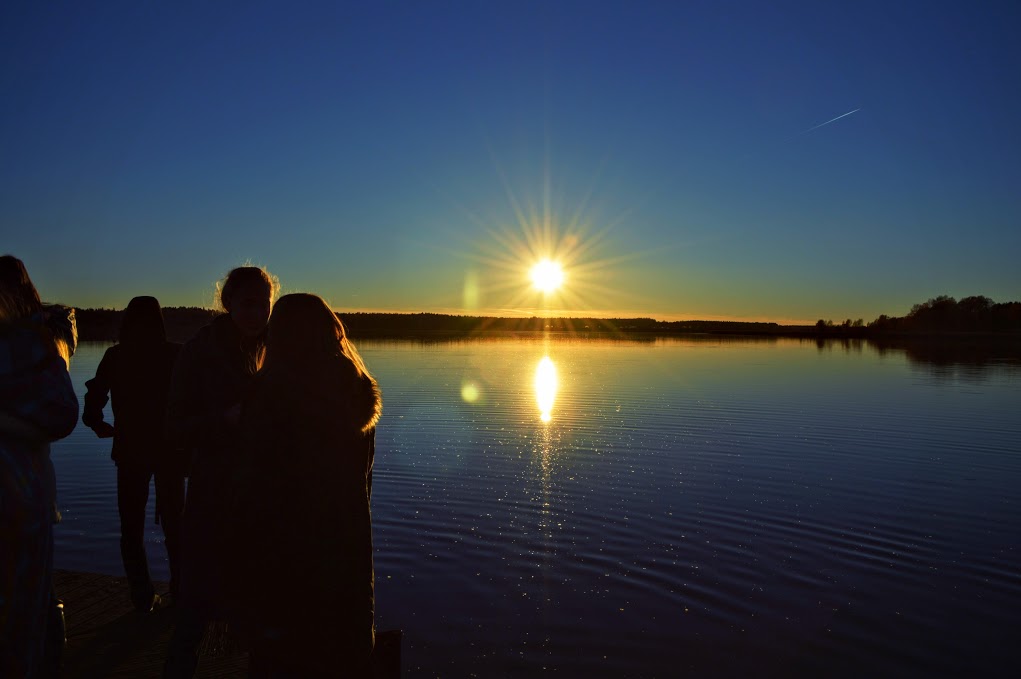
compile and present a poster of what we came up with. After a delicious lunch we
went to Tamula Lake and took pictures. As mentioned, in the evening, we had a
gala dinner in Püssirohu Kelder, probably the only thing in Tartu that holds a
Guinness World Record, for having the highest ceiling in a catering location,
because it is located in medieval gunpowder storage rooms.
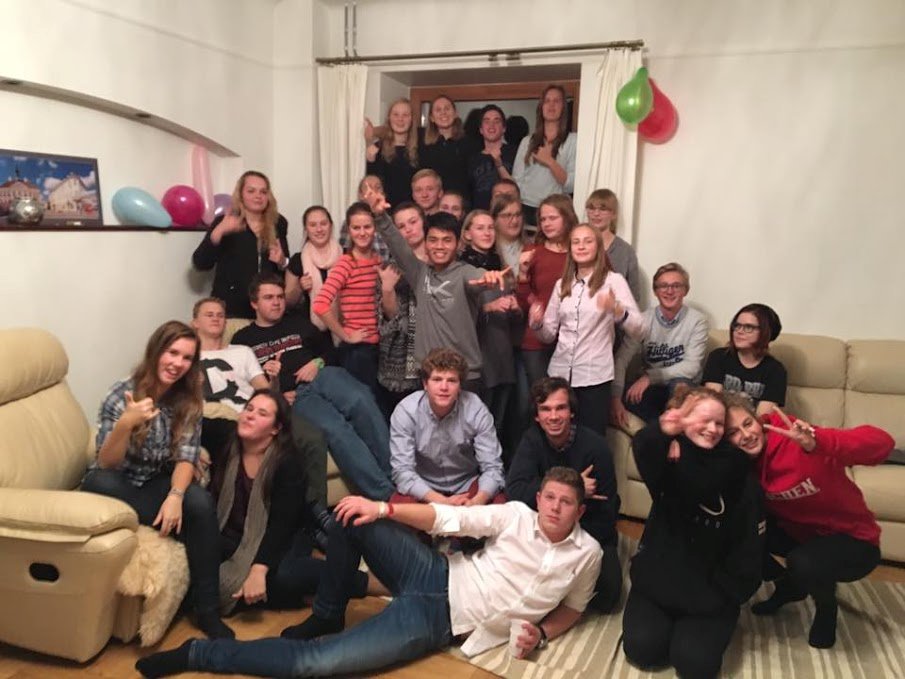
That evening we had a party for a boy, whose birthday it was. Well, more
of a small gathering, with board games. Scrabble turned out to be the most
popular one, other than that, we just socialized and generally felt good.
This was it, the last day; where we had to present our project work, have
final discussions on the topic of migration. This was good, to see that the
project had run its course and that we had all been educated on migration.
Parting with our German guests was harder than expected, the week we had spent
together had had a big influence on us and, of course we had formed friendships.
That evening we had a little gathering and some pool playing, but the group had
shrunk considerably with the departure of the Germans. It was hard to go to
sleep, knowing that we had to go through the same parting ceremony the next day.
After we sent of the Belgian group as well, it hit us, how hard it had actually
been, constantly speaking a foreign language and trying to get to know everyone.
Now, weeks later, when I look back at the ERASMUS+ student exchange of October,
2015, I feel happy. It still feels good to think about introducing people to our
way of living, our ideas, and our society, as it should. After all, we all did a
tremendous amount of work, the hosts, tending to their guest’s needs, the
guests, living in a completely alien environment, while trying to actively work
on something, and the teachers, who kept us all together while doing so. To
conclude, the project was well organized, and I’d say that every single one of
us benefited from it. All we have to do now is eagerly wait for our turn to
visit a foreign country.